LinkedIn Algorithm Update 2026: What Actually Changed (And What’s Hype)
LinkedIn Algorithm Update 2026: What Actually Changed (And What's Hype)
Read Article
A marketing funnel is the journey a person takes from first discovering your business to becoming a customer.
At the beginning, they may never have heard of you. Later, they may visit your website, compare your offer with competitors, read reviews, ask questions, and finally decide whether to buy, book, or enquire.
For small businesses, understanding this journey is important because it shows where potential customers lose interest.
You may have enough website traffic but too few enquiries. You may generate leads but struggle to convert them into sales. A clear funnel helps you identify the weak stage instead of spending more money on marketing without fixing the real problem.
A marketing funnel is a simple way to organise the customer journey.
It usually has three core stages:
Awareness
Consideration
Conversion
The funnel is wider at the top because many people may discover your business, but only a smaller percentage will become customers.
This is normal. Not every visitor is ready to buy, and not every lead is a good fit.
The purpose of the funnel is not to convert everyone. It is to guide the right people towards the next step.
At the awareness stage, people are discovering your business for the first time.
They may find you through:
Google search
Social media
Paid advertising
Referrals
Videos
Events
Online directories
Partner websites
At this stage, most people are not ready to buy. They may only be researching a problem or looking for information.
They need useful, clear, and relevant content.
Examples include:
Blog articles
How-to guides
Short videos
Social media posts
Checklists
Educational webinars
Frequently asked questions
The goal is not to push for a sale immediately. The goal is to help people understand their problem and recognise that your business may be able to help.
A small accounting firm may publish an article called:
Five Tax Mistakes Small Businesses Should Avoid
The reader may not book a consultation immediately, but the article introduces the firm and builds early trust.
Track:
Website traffic
Search impressions
Social media reach
Video views
New visitors
Referral traffic
Brand searches
These metrics show whether more relevant people are discovering the business.
At the consideration stage, people understand their problem and are comparing possible solutions.
They may ask:
Can this business solve my problem?
How does it work?
What experience do they have?
Can I trust them?
How are they different?
What will the service cost?
What happens after I contact them?
This is often the most important stage for service-based businesses.
They need evidence, clarity, and confidence.
Useful content includes:
Case studies
Testimonials
Service pages
Comparison guides
Process explanations
Pricing information
Client results
Credentials
Team profiles
Webinars
Consultation guides
Your website should clearly explain what you do, who you help, and why someone should choose you.
A cybersecurity consultancy may attract traffic through a blog about compliance requirements.
At the consideration stage, the prospect may then review:
The consultancy’s assessment process
Relevant certifications
Industry experience
Case studies
Client testimonials
Scope of services
The prospect is deciding whether the provider appears credible and suitable.
Track:
Service-page visits
Case study views
Return visitors
Guide downloads
Email sign-ups
Webinar registrations
Time on priority pages
Contact-form starts
These signals show whether people are moving from general interest to active evaluation.
At the conversion stage, the prospect is ready to take action.
That action may be:
Making a purchase
Booking a consultation
Requesting a quotation
Completing an enquiry form
Scheduling a demonstration
Registering for a service
Calling the business
At this stage, the next step should be clear and low-risk.
They need confidence and simplicity.
Your conversion process should include:
A strong call to action
A simple form
Clear contact details
Transparent next steps
Fast response times
Relevant reassurance
Minimal friction
Avoid asking for too much information too early.
A long form with unnecessary questions can reduce enquiries. A vague button such as “Submit” is less effective than a clear action such as “Request a Consultation” or “Get a Quote.”
Track:
Enquiries
Consultation bookings
Sales meetings
Quotations requested
Purchases
Conversion rate
Cost per lead
Cost per customer
Revenue generated
These metrics show whether marketing activity is creating business results.
| Funnel stage | What the customer needs | Useful content |
|---|---|---|
| Awareness | Answers and education | Blogs, videos, social posts and guides |
| Consideration | Proof and clarity | Case studies, testimonials and service pages |
| Conversion | Confidence and an easy next step | Consultations, quotations, forms and clear calls to action |
The content should match the customer’s level of readiness.
A person reading an introductory article may not be ready for a sales call. A person viewing a pricing or service page may be much closer to making a decision.
A funnel leak happens when people reach one stage but do not move to the next.
If many people visit your website but few enquire, the awareness stage may be working while the consideration stage is weak.
Possible causes include:
Irrelevant traffic
Unclear services
Weak calls to action
Limited proof
Poor page structure
No lead capture offer
Content that does not connect to your services
Improve service pages, add case studies, strengthen calls to action, and make the value of your offer clearer.
If you generate leads but close very few, the conversion stage may be weak.
Possible causes include:
Low-quality leads
Slow follow-up
Poor qualification
Unclear pricing
Weak sales conversations
Limited trust
Complicated buying process
A mismatch between the marketing promise and the actual offer
Review lead quality, improve response times, simplify the sales process, and make the next step easier.
If people see your content but rarely visit your website or take the next step, your message may not be strong enough.
Possible causes include:
Generic content
Weak headlines
Poor audience targeting
No clear relevance
Inconsistent publishing
No connection between content and service
Create content around real customer questions and include a relevant next step.
One of the most common mistakes small businesses make is increasing advertising or publishing more content before fixing conversion problems.
More traffic will not solve:
An unclear offer
A weak website
Poor lead handling
Missing trust signals
A slow sales process
Confusing pricing
Weak calls to action
If your website receives 5,000 visits and converts 1% into leads, you generate 50 leads.
Increasing traffic to 10,000 may generate 100 leads, but improving the conversion rate from 1% to 2% would achieve the same result without doubling traffic.
The strongest approach is usually:
Measure each funnel stage
Identify the largest drop-off
Fix that stage
Measure the result
Then invest in more traffic
A local consulting business may have this funnel:
2,000 monthly website visitors
100 guide downloads
30 consultation requests
12 proposals
Four new customers
The business can calculate where people are dropping out.
If website traffic is growing but guide downloads remain flat, the problem may be the content offer or landing page.
If consultation requests are strong but proposals are low, lead qualification or sales follow-up may be weak.
The funnel makes the problem visible.
Identify who you are trying to reach, what problem they have, and what would make them trust a provider.
Publish useful information that answers common questions and attracts the right audience.
Create service pages, testimonials, case studies, process explanations, and guides.
Use simple calls to action such as:
Book a consultation
Request a quote
Download the guide
Speak with an expert
Schedule a demonstration
Measure traffic, leads, opportunities, and sales.
Do not change everything at once. Start with the stage showing the biggest drop.
Different visitors have different needs. Direct campaigns to the most relevant service, offer, or landing page.
People at the awareness stage may need education before they are ready to speak with sales.
Every useful piece of content should guide the reader towards another relevant action.
A strong funnel can still fail if enquiries are not answered quickly.
Traffic matters, but it does not show whether the business is generating leads or customers.
Some leads are ready to buy. Others need more information. Use email, follow-up content, and clear qualification to manage them differently.
A marketing funnel helps small businesses understand how people move from first contact to becoming customers.
The three core stages are:
Awareness: people discover you
Consideration: they evaluate whether they trust you
Conversion: they take action
At the top of the funnel, provide useful answers. In the middle, provide proof and explain your process. At the bottom, make the next step clear and low-risk.
Most importantly, identify where people are dropping out.
If you have traffic but few leads, improve the middle of the funnel. If you have leads but few sales, improve the bottom. Fix the leak before spending more money to attract additional traffic.
A marketing funnel audit can review your website traffic, content, calls to action, lead quality, and conversion process.
The goal is to identify where potential customers are dropping out and which improvements should be prioritised before additional marketing budget is spent.
A marketing funnel is the journey a person takes from discovering a business to becoming a customer.
It helps small businesses identify where potential customers lose interest and where marketing or sales processes need improvement.
Compare the number of people moving between each stage. High traffic with few leads suggests a consideration problem. Many leads with few sales suggest a conversion problem.
Not always. If your website or sales process has a low conversion rate, fix that before spending more on traffic.
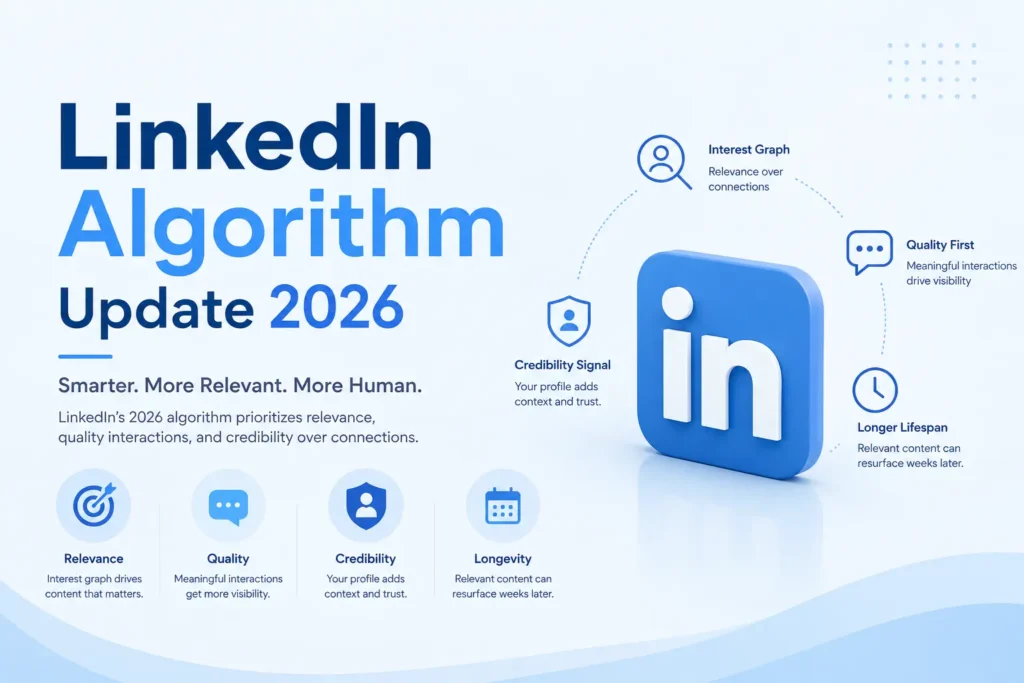
LinkedIn Algorithm Update 2026: What Actually Changed (And What's Hype)
Read Article
Anthropic has temporarily suspended Claude Fable 5 following reported U.S. government concerns around advanced AI capabilities.
Read Article
We use cookies to improve your experience on our site. By using our site, you consent to cookies.
Manage your cookie preferences below:
Essential cookies enable basic functions and are necessary for the proper function of the website.
These cookies are needed for adding comments on this website.
Google Tag Manager simplifies the management of marketing tags on your website without code changes.
Statistics cookies collect information anonymously. This information helps us understand how visitors use our website.
Google Analytics is a powerful tool that tracks and analyzes website traffic for informed marketing decisions.
Service URL: policies.google.com (opens in a new window)
You can find more information in our Cookie Policy and Privacy Policy.