LinkedIn Algorithm Update 2026: What Actually Changed (And What’s Hype)
LinkedIn Algorithm Update 2026: What Actually Changed (And What's Hype)
Read Article
Digital marketing offers businesses more ways to reach customers than ever before. Search engines, social media platforms, email campaigns, paid advertising, video content, webinars, podcasts, and online communities can all help generate awareness and leads.
But having more options does not always make marketing easier.
One of the most common mistakes businesses make is trying to use every available channel at the same time. They create social media accounts, launch paid advertisements, publish occasional blogs, send emails, and experiment with video—without having enough time, budget, or resources to manage any of them properly.
The result is usually inconsistent marketing, unclear performance, and limited returns.
A more effective approach is to choose two or three digital marketing channels that fit your audience, business goals, sales cycle, budget, and internal capabilities. You can then build depth, improve performance, and expand only after those channels begin producing repeatable results.
This guide explains the major digital marketing channels, their strengths and limitations, and how to identify the right combination for your business.
Digital marketing channels are the online platforms, methods, and communication systems businesses use to reach, engage, educate, and convert potential customers.
Common digital marketing channels include:
Search engine optimisation
Content marketing
Social media marketing
Email marketing
Paid advertising
Video marketing
Webinars and virtual events
Influencer and partnership marketing
Online communities
Affiliate and referral marketing
Each channel serves a different purpose.
Some channels are better for building long-term visibility. Others are designed to generate quick traffic. Some help establish trust, while others are more effective at converting existing prospects into customers.
There is no universally best digital marketing channel. The right choice depends on what your business is trying to achieve.
Every marketing channel requires planning, content, monitoring, optimisation, and ongoing management.
For example, running a successful social media programme involves much more than publishing posts. It may require:
Audience research
Content creation
Graphic design
Video production
Community management
Performance analysis
Employee or leadership participation
Consistent publishing
SEO also requires sustained effort. It involves keyword research, technical optimisation, content development, internal linking, authority building, and regular updates.
Paid advertising can produce traffic quickly, but it needs accurate targeting, strong landing pages, conversion tracking, budget management, and continuous testing.
When resources are spread across too many channels, quality usually falls. Businesses may remain active everywhere but fail to become effective anywhere.
A better principle is:
Choose fewer channels, understand them deeply, and use them consistently.
Once your first channels produce measurable and repeatable outcomes, you can gradually add new ones.
Before investing in a marketing channel, evaluate it against four core factors:
Consider both direct and indirect costs.
Direct costs may include advertising spend, software subscriptions, agency fees, influencer payments, or production expenses.
Indirect costs include employee time, design support, writing, video editing, campaign management, and reporting.
A channel that appears inexpensive may still require considerable internal effort.
Some channels can generate traffic immediately, while others take several months to build momentum.
Paid search and social advertising can produce visits soon after a campaign goes live. SEO, content marketing, and community building generally take longer but may create more sustainable results.
Your ideal channel mix should reflect how quickly your business needs results.
Every channel has a different operating rhythm.
Email may require one or two high-quality campaigns each month. Social media may require multiple weekly posts and regular engagement. SEO may involve content publishing, website improvements, and ongoing performance reviews.
Choose channels your team can realistically maintain.
Owned channels give you greater control over your audience and communication. Your website and email database are examples of owned assets.
Platforms such as LinkedIn, Instagram, YouTube, and Google provide access to large audiences, but their algorithms, advertising policies, features, and reach can change.
A strong digital marketing strategy should therefore include at least one owned channel.
| Channel | Cost | Speed | Maintenance | Control | Best suited for |
|---|---|---|---|---|---|
| SEO | Low to medium | Slow | Medium to high | High | Long-term visibility and organic leads |
| Content marketing | Medium | Slow to medium | High | High | Trust, education and authority |
| Social media | Low to medium | Medium | High | Low to medium | Awareness and engagement |
| Email marketing | Low | Medium to fast | Medium | High | Lead nurturing and conversion |
| Paid advertising | Medium to high | Fast | High | Medium | Immediate traffic and scalable campaigns |
| Video marketing | Medium to high | Medium | High | Medium | Education, awareness and trust |
| Webinars | Medium | Medium | Medium to high | High | B2B lead generation and complex services |
| Partnerships | Variable | Medium | Medium | Medium | Audience expansion and credibility |
The right combination will usually include channels that perform different roles across the customer journey.
Search engine optimisation, or SEO, is the process of improving your website so that it can appear more prominently when people search for relevant information, products, or services.
SEO may include:
Keyword research
Website structure improvements
Technical SEO
On-page optimisation
Content creation
Internal linking
Local SEO
Digital PR and authority building
Content updates and performance monitoring
SEO can create long-term visibility and help businesses reach people who are actively searching for a solution.
A well-ranking page may continue attracting visitors long after it is published. This gives SEO a compounding effect: the value of useful content and website improvements can increase over time.
SEO can also support credibility. Businesses that consistently appear for relevant searches may be perceived as more established or knowledgeable.
SEO rarely produces immediate results. Competitive keywords may require considerable time, content quality, website authority, and technical improvement.
Search performance is also influenced by competitors and changes in search behaviour.
Want sustainable organic traffic
Sell services or products people actively search for
Can invest consistently for several months
Have expertise that can be turned into useful content
Want to reduce long-term dependence on advertising
Content marketing involves creating and distributing useful information that helps your audience solve problems, understand opportunities, or make better decisions.
Content formats may include:
Blog articles
Guides and e-books
Case studies
Reports
Checklists
Templates
Infographics
Videos
Podcasts
White papers
Comparison pages
Frequently asked questions
Content marketing and SEO often work together. SEO helps people discover content, while strong content gives search engines and prospective customers a reason to value your website.
High-quality content can:
Build trust
Demonstrate expertise
Support search visibility
Answer buyer questions
Reduce sales friction
Generate leads
Give sales teams useful resources
Support email and social media campaigns
For businesses selling complex, high-value, or advisory-led services, content is particularly valuable because buyers often need education before they are ready to speak with a provider.
Content marketing requires consistency and subject-matter expertise. Publishing generic or repetitive articles is unlikely to create strong differentiation.
The content must reflect real audience concerns rather than being created only to promote the company.
Need to build authority
Sell complex or considered-purchase services
Have a longer sales cycle
Can provide practical expertise
Want reusable assets across several channels
Social media marketing uses platforms such as LinkedIn, Instagram, Facebook, YouTube, and X to build awareness, engage audiences, and distribute content.
The right platform depends on where your intended audience spends time and how they prefer to consume information.
LinkedIn may be more relevant for B2B organisations and professional services. Instagram may work better for visual brands, consumer products, lifestyle businesses, or creative industries. YouTube can be valuable for demonstrations, education, interviews, and detailed explanations.
Social media can help businesses:
Increase brand visibility
Humanise the organisation
Share expertise
Build leadership profiles
Distribute content
Engage directly with audiences
Support recruitment
Promote events and campaigns
Gather audience feedback
It can also provide faster feedback than many other channels. Businesses can observe which topics, messages, and formats attract interest.
Social media requires consistent participation. Organic reach can vary, and businesses do not fully control platform algorithms or audience access.
Follower count should not be treated as the primary measure of success. Relevant engagement, website visits, enquiries, saves, shares, and influenced opportunities are generally more useful.
Need stronger awareness
Have ideas or expertise to share regularly
Can maintain a consistent publishing schedule
Want to build visible leadership
Serve an audience active on a specific platform
Email marketing allows businesses to communicate directly with prospects, customers, subscribers, partners, and other stakeholders.
Unlike social media followers, an email database is an owned audience asset. The business has greater control over when and how it communicates.
Email campaigns may include:
Newsletters
Educational sequences
Lead-nurturing campaigns
Event invitations
Product announcements
Offers
Customer onboarding
Re-engagement campaigns
Follow-up sequences
Account-based communication
Email is relatively inexpensive and can be highly targeted.
Subscribers can be segmented by industry, interest, behaviour, stage in the buying journey, location, or previous interactions. This allows businesses to send more relevant communications.
Email is also effective for nurturing people who are interested but not yet ready to buy.
Email performance depends heavily on list quality, relevance, consent, frequency, and deliverability.
Buying a large database and sending generic promotional emails may damage trust and produce poor results. Businesses should focus on permission-based list growth and meaningful communication.
Already generate website visitors or leads
Have a database of prospects or customers
Need to nurture long sales cycles
Want greater control over audience communication
Can provide regular value beyond promotional messages
Paid advertising allows businesses to purchase visibility on search engines, social media platforms, websites, and online marketplaces.
Common forms include:
Paid search advertising
Display advertising
Social media advertising
Video advertising
Retargeting
Sponsored content
Native advertising
Paid campaigns can generate traffic quickly and provide detailed targeting options.
Businesses may target users based on:
Search intent
Job title
Industry
Company size
Location
Interests
Online behaviour
Previous website visits
Existing customer characteristics
Paid advertising is useful for testing offers, entering new markets, promoting events, and scaling a campaign that already converts.
Traffic generally stops when spending stops.
Paid advertising can also become expensive when competition is high or when targeting, messaging, landing pages, and conversion processes are weak.
Advertising should not be used to compensate for an unclear offer or poor website experience.
Need results quickly
Have a clear offer
Understand their target audience
Have conversion-focused landing pages
Can track enquiries and revenue accurately
Have already validated their message or service
Video marketing can be used across websites, social media platforms, email campaigns, advertisements, and sales processes.
Popular video formats include:
Educational explainers
Expert interviews
Product demonstrations
Customer stories
Webinars
Event highlights
Short-form social videos
Recorded presentations
Frequently asked question videos
Video can explain complex subjects clearly and create a stronger sense of trust than text alone.
It also allows prospective customers to see the people, knowledge, and personality behind a business.
One long video can often be repurposed into several shorter clips, articles, social posts, and email content.
Strong video content requires planning, confident speakers, editing, and a clear distribution strategy.
Production quality matters, but the usefulness and clarity of the content are usually more important than expensive equipment.
Need to explain complex offerings
Have credible experts or leaders
Want to build trust
Can repurpose recordings into several formats
Serve audiences that prefer visual learning
Webinars allow businesses to educate a targeted audience while collecting lead information and creating opportunities for follow-up conversations.
They are particularly useful in B2B marketing, professional services, technology, consulting, compliance, finance, and other sectors where buyers need detailed information.
Webinars can:
Demonstrate subject-matter expertise
Generate qualified leads
Support partnerships
Address buyer concerns
Create reusable recordings
Provide content for follow-up campaigns
Help sales teams identify engaged prospects
Registration does not guarantee attendance. The topic must be specific, relevant, and valuable enough to justify the audience’s time.
A webinar also needs promotion, good speakers, structured follow-up, and clear next steps.
Sell complex services
Need to educate buyers
Have internal experts
Want to generate and qualify B2B leads
Can follow up systematically after the event
Partnership marketing involves collaborating with individuals, organisations, associations, publishers, or complementary brands that already have access to your target audience.
This may include:
Co-hosted webinars
Guest articles
Referral agreements
Joint research
Event partnerships
Industry association collaborations
Influencer campaigns
Technology or service alliances
A credible partner can help a business reach new audiences and gain trust more quickly.
Partnerships may be especially effective when both organisations serve the same audience but provide different services.
The partner’s reputation, audience quality, communication standards, and expectations must be carefully evaluated.
Poorly aligned partnerships can confuse customers or create reputational risk.
Serve a clearly defined niche
Have complementary service providers
Operate in trust-driven markets
Want to enter a new audience or geography
Can offer mutual value
Selecting channels should not begin with what is currently popular. It should begin with your customer, commercial objectives, and available resources.
Use the following process.
Different goals require different channels.
Consider:
Social media
Video marketing
Partnerships
Display advertising
Public relations
Consider:
SEO
Content marketing
Email capture
Webinars
Consider:
Paid search
Paid social
Retargeting
Conversion-focused landing pages
Consider:
Email marketing
Case studies
Webinars
Sales enablement content
Retargeting
Choose one primary objective before selecting a channel.
Ask:
What problems are potential customers trying to solve?
Do they search for those problems online?
Which websites, platforms, or communities do they use?
Who influences their decisions?
Do they prefer articles, video, reports, events, or direct conversations?
How long does their buying decision take?
Are there multiple decision-makers?
A platform is only valuable when the right audience uses it in a way that supports your objective.
Your channel strategy must be operationally realistic.
Consider whether you have access to:
Writers
Designers
Subject-matter experts
Video editors
Campaign managers
Advertising budget
Marketing automation tools
Analytics expertise
Sales follow-up capacity
Do not select a content-heavy channel when nobody can create content consistently. Do not invest heavily in paid campaigns when lead handling and conversion tracking are not ready.
Most customers do not move directly from seeing a business to purchasing from it.
A typical journey may include:
Discovering the company
Recognising a problem
Researching possible solutions
Comparing providers
Reviewing evidence
Speaking with the business
Making a decision
Different channels support different stages.
For example:
SEO may attract people researching a problem.
Content may help them understand their options.
Social media may reinforce awareness and credibility.
Email may nurture ongoing interest.
Case studies may reduce perceived risk.
Paid retargeting may bring visitors back.
A consultation may convert interest into an opportunity.
Your channels should work together rather than operate in isolation.
Create a simple scoring system from one to five.
| Evaluation factor | Question |
|---|---|
| Audience fit | Is our target audience active on this channel? |
| Commercial relevance | Can this channel influence enquiries or revenue? |
| Cost | Can we sustain the financial investment? |
| Speed | Does the expected timeframe match our goals? |
| Capability | Can our team manage it effectively? |
| Control | Do we own the audience or depend on a platform? |
| Measurement | Can we connect activity to meaningful outcomes? |
| Scalability | Can the channel grow without becoming unmanageable? |
Avoid choosing a channel only because a competitor uses it. Their audience, budget, brand strength, team, and goals may be different from yours.
For many businesses, a sensible starting combination is:
Choose SEO or content marketing.
These channels help build visibility, authority, and reusable assets over time.
Choose email marketing.
Email helps turn website visitors, event attendees, and early-stage prospects into ongoing relationships.
Choose social media or paid advertising.
Social media can distribute expertise and build awareness. Paid advertising can accelerate a proven offer or campaign.
A typical early-stage combination might therefore be:
SEO and content marketing
Email marketing
LinkedIn or paid search
The exact mix should still depend on audience behaviour and commercial priorities.
Paid advertising is most effective when the business already understands:
Who the target customer is
What problem the offer solves
Which message attracts attention
What action the visitor should take
How the landing page converts
How leads will be followed up
How success will be measured
Advertising an unproven offer often increases spending without solving the underlying problem.
Before scaling paid advertising, validate the offer through existing customers, direct outreach, organic content, smaller tests, or pilot campaigns.
A popular platform is not automatically relevant to your audience.
Posting frequency, impressions, followers, and clicks can be useful indicators, but they should not replace commercial metrics.
Publishing intensively for one month and disappearing for the next three months makes it difficult to build momentum.
Each platform has different audience expectations and content behaviours. The core idea can be reused, but the format and presentation should be adapted.
Traffic has limited value when visitors do not know what to do next.
Every channel should connect to a relevant next step, such as:
Downloading a guide
Registering for a webinar
Joining an email list
Requesting an assessment
Booking a consultation
Viewing a case study
Contacting the business
Adding new platforms too early increases complexity. Improve existing channels before creating more.
The right metrics depend on the purpose of the channel.
Organic traffic
Search visibility
Qualified landing-page visits
Enquiries from organic search
Assisted conversions
Content engagement
Keyword coverage
Content views
Time and engagement
Downloads
Email subscriptions
Sales usage
Enquiries influenced
Backlinks or mentions
Relevant reach
Engagement quality
Profile visits
Website traffic
Direct enquiries
Content saves and shares
Opportunities influenced
Delivery rate
Click rate
Unsubscribe rate
Replies
Content downloads
Event registrations
Lead progression
Revenue or opportunities influenced
Cost per click
Conversion rate
Cost per lead
Cost per qualified opportunity
Return on advertising spend
Customer acquisition cost
Landing-page performance
Avoid evaluating channels only through last-click conversions. A prospect may discover the business through social media, read several articles, attend a webinar, receive emails, and then make direct contact.
The strongest marketing strategies connect channels into one coordinated system.
For example:
Publish a search-optimised guide.
Repurpose the guide into social media posts.
Offer a downloadable checklist within the article.
Add interested readers to an email sequence.
Invite engaged subscribers to a webinar.
Retarget high-intent website visitors.
Provide qualified leads with a consultation or audit.
This approach allows one core topic to create value across several channels while giving the audience multiple ways to engage.
You do not need to dominate every digital marketing channel.
You need to select the channels that match:
Your audience
Your commercial goals
Your available resources
Your sales cycle
Your ability to create consistent value
Your measurement capabilities
Start with two or three channels.
Choose one that compounds over time, such as SEO or content marketing. Add an owned channel, such as email, to nurture and convert interest. Then use social media or paid advertising to expand reach once your message and offer are working.
Depth, consistency, and integration will usually produce better results than scattered activity across every platform.
Unsure which digital marketing channels deserve your time and budget?
Start by reviewing your goals, audience behaviour, current website performance, available content, internal capabilities, and conversion process.
Read our step-by-step digital marketing strategy guide next, or request a complimentary marketing audit to identify the channels most likely to support your business goals.
The most effective channels depend on the business, audience, goals, and resources. SEO, content marketing, email, social media, and paid advertising are widely used, but their effectiveness varies by market and customer journey.
Many small businesses can begin with content or SEO for long-term visibility and email marketing for nurturing potential customers. A social platform may then be added based on where the intended audience is most active.
SEO and paid advertising serve different purposes. SEO generally takes longer but can create sustainable visibility. Paid advertising can generate traffic quickly but requires ongoing spending. Many businesses benefit from using both at different stages.
A business should use only as many channels as it can manage consistently and measure effectively. For many organisations, starting with two or three well-integrated channels is more effective than being active across six or seven.
The timeframe depends on the channel. Paid campaigns may generate traffic quickly, while SEO, content, and community-building often require several months of consistent execution. Email may deliver faster results when the business already has a relevant subscriber database.
An owned channel is a platform or audience asset the business controls, such as its website, blog, email database, or customer portal. Owned channels reduce dependence on third-party algorithms and advertising platforms.
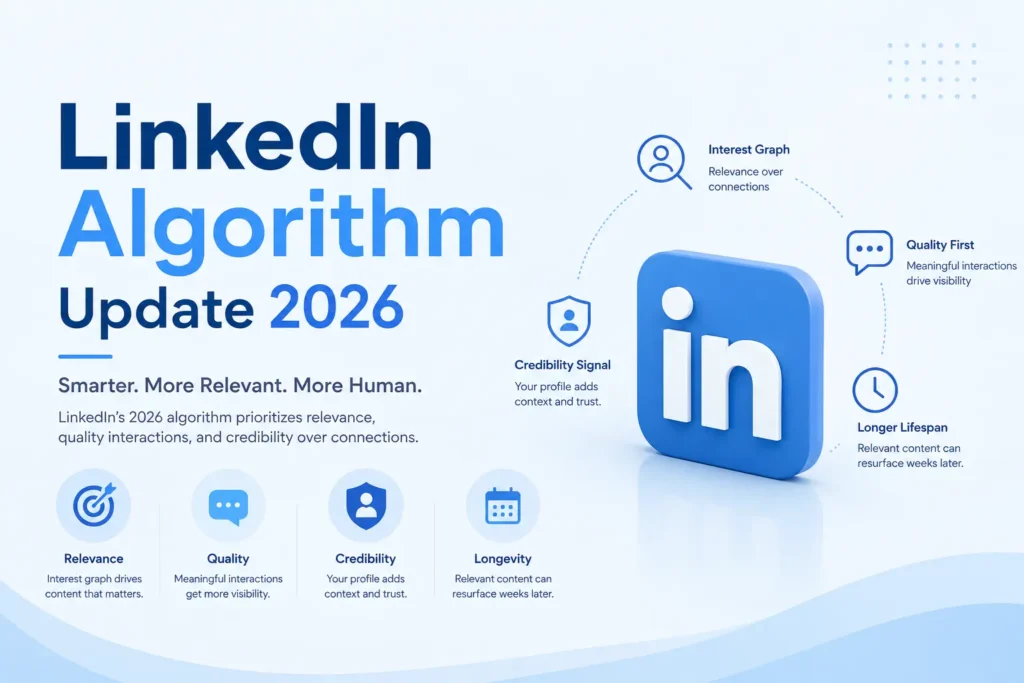
LinkedIn Algorithm Update 2026: What Actually Changed (And What's Hype)
Read Article
Anthropic has temporarily suspended Claude Fable 5 following reported U.S. government concerns around advanced AI capabilities.
Read Article
We use cookies to improve your experience on our site. By using our site, you consent to cookies.
Manage your cookie preferences below:
Essential cookies enable basic functions and are necessary for the proper function of the website.
These cookies are needed for adding comments on this website.
Google Tag Manager simplifies the management of marketing tags on your website without code changes.
Statistics cookies collect information anonymously. This information helps us understand how visitors use our website.
Google Analytics is a powerful tool that tracks and analyzes website traffic for informed marketing decisions.
Service URL: policies.google.com (opens in a new window)
You can find more information in our Cookie Policy and Privacy Policy.