In the world of digital marketing, SEO (Search Engine Optimization) and online advertising, one word plays a central role in connecting businesses with their audience — keywords. Whether you are writing a blog, running Google Ads, optimizing your website, or planning social media campaigns, keywords act as the bridge between what people search for and the content you provide.
This blog will cover everything you need to know about — what they are, why they matter, different types, and exactly where and how to use them.
What Are They?
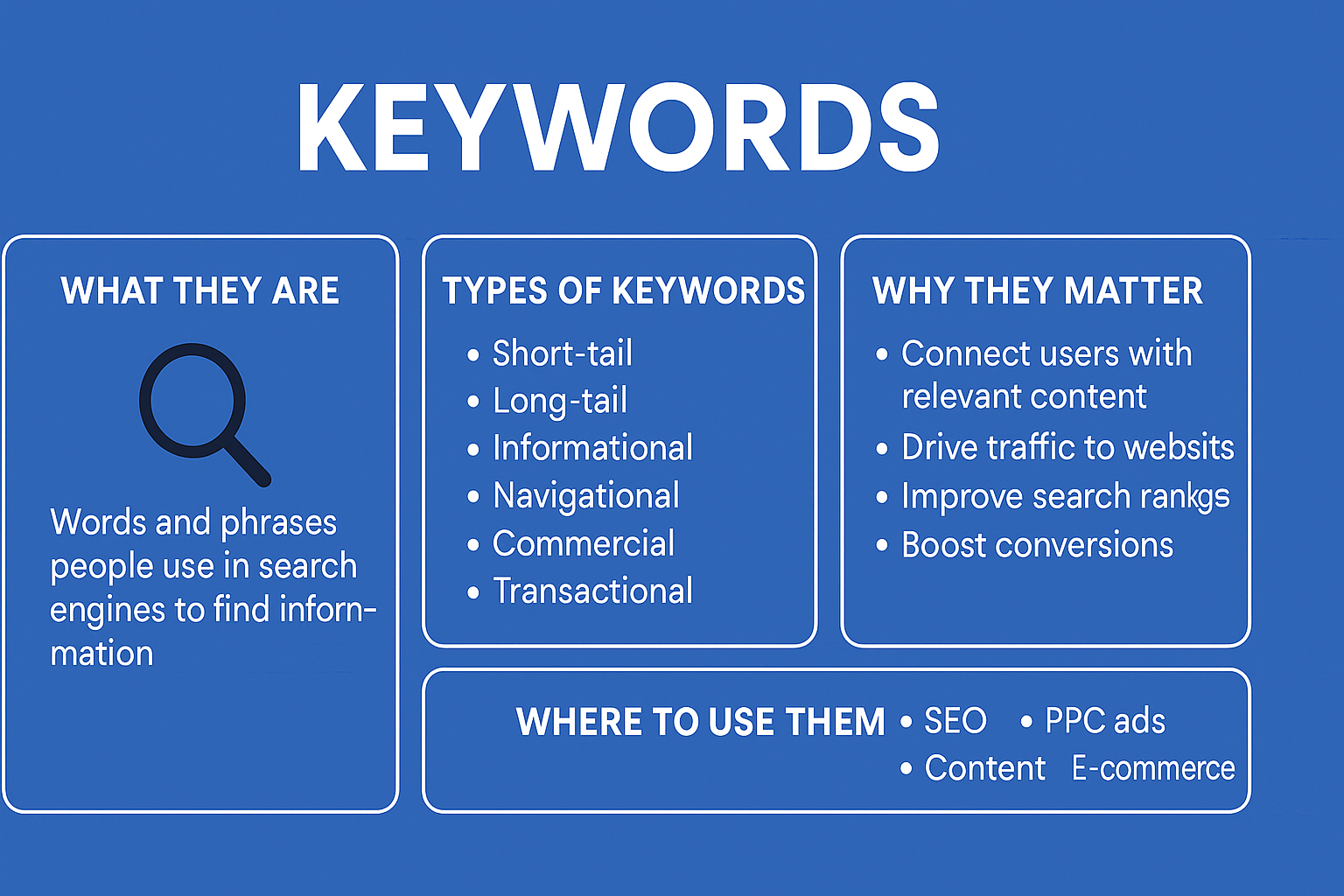
These are the words or phrases people type into search engines like Google, Bing, or YouTube to find information, products, or services.
For example:
- Someone looking for a laptop may search for “best budget laptop under 50,000”.
- A person searching for health advice may type “how to control blood pressure naturally”.
These search terms are keywords and businesses target them to make sure their content appears in front of the right audience.
Why Are Keywords Important?
- Connects Users With Solutions: They help you reach people actively searching for answers, products, or services.
- Drives Website Traffic: Optimized content with the right words ranks higher in search engines, leading to more visitors.
- Boosts Conversions: Targeting commercial or transactional (e.g., “buy iPhone 15 online”) brings in users ready to purchase.
- Shapes Content Strategy: They give insights into what your audience cares about and help you create valuable content.
- Enhances Paid Campaigns: In Google Ads, Facebook Ads and Amazon Ads, they determine where your ads appear and who sees them.
Types of Keywords
Understanding the types helps you target them effectively.
1. Based on Length
- Short-tail (1–2 words): Broad searches, high traffic, high competition.
- Example: “shoes”, “insurance”.
- Long-tail (3+ words): More specific, lower competition, high intent.
- Example: “best running shoes for flat feet”.
2. Based on User Intent
- Informational: Used when people seek knowledge.
- Example: “how to lose weight”.
- Navigational: When users look for a specific brand/website.
- Example: “Nike official store”.
- Commercial: Research before purchase.
- Example: “best laptops for students 2025”.
- Transactional: High buying intent.
- Example: “buy iPhone 15 online”.
3. Based on SEO/PPC Use
- Primary Keywords: Main word that defines your topic.
- Secondary/LSI Keywords: Related phrases to support content.
- Negative Keywords (in paid ads): Words you exclude so your ads don’t show for irrelevant searches.
Where Should You Use?
To get maximum results, keywords must be placed strategically in both organic SEO and paid marketing.
1. In SEO (Search Engine Optimization)
- Page Titles (Title Tags) – Include your primary keyword.
- Meta Descriptions – Add key-words naturally to boost click-through rates.
- Headings (H1, H2, H3) – Use primary and secondary key-words.
- URL Slug – Keep it keyword-rich but simple.
- Body Content – Naturally place these throughout articles, blogs or landing pages.
- Alt Text for Images – Helps search engines understand visuals.
- Internal Linking – Use keyword-rich anchor text.
Learn More in our blog post: How to do a proper site audit from scratch
2. In PPC (Pay-Per-Click Advertising)
- Search Ads (Google Ads, Bing Ads) – Target exact match, phrase match or broad match keywords.
- Ad Headlines & Descriptions – Include key-words to improve relevance.
- Negative Keywords – Prevent wasting budget on irrelevant clicks.
- Landing Pages – Align ad keywords with landing page content for better Quality Score.
3. In Content Marketing
- Blog Posts – Optimize for informational and long-tail keywords.
- Videos/YouTube – Use them in titles, descriptions, and tags.
- Social Media – Hashtags often act as keywords for discoverability.
4. In E-Commerce & Amazon SEO
- Product Titles – Add high-intent words.
- Product Descriptions & Bullet Points – Use variations and related words.
- Backend Search Terms – Hidden keywords for better product visibility.
Best Practices for Using Keywords
- Do Keyword Research First: Use tools like Google Keyword Planner, SEMrush, Ahrefs, or Ubersuggest.
- Focus on User Intent: Choose key-words based on what stage of the buyer journey the audience is in.
- Avoid Keyword Stuffing: Overusing can hurt rankings and readability.
- Use Synonyms and Variations: This makes content natural and covers more search queries.
- Update Regularly: Trends change, so refresh your strategy.
- Balance SEO & UX: Content should be keyword-optimized but valuable for readers.
Examples of Keywords in Action
- SEO Blog: A blog titled “10 Best Digital Marketing Tools for Startups” targets “digital marketing tools for startups” as the main keyword.
- Google Ads Campaign: A shoe brand targets “buy running shoes online” as a transactional keyword, while excluding “free running shoes” as a negative keyword.
- E-commerce Store: A product page for a blender uses “best juicer mixer grinder under 5000” in its title and description.
Keywords are the backbone of SEO, PPC, and content marketing. They help you reach the right audience, improve visibility, and increase conversions. From blog titles to ad campaigns, product descriptions to YouTube tags, the smart use of keywords ensures that your content resonates with what people are actually searching for.
The key is to focus on relevance, intent, and natural usage. With the right strategy, keywords can transform your online presence into a traffic and revenue-generating machine.
How often should I update my keyword strategy?
What is keyword stuffing, and why is it harmful?
What’s the difference between primary and secondary (or LSI) keywords?
Secondary / LSI (Latent Semantic Indexing) keywords: Related or supporting terms, synonyms, or phrases that help reinforce the context and cover variations.