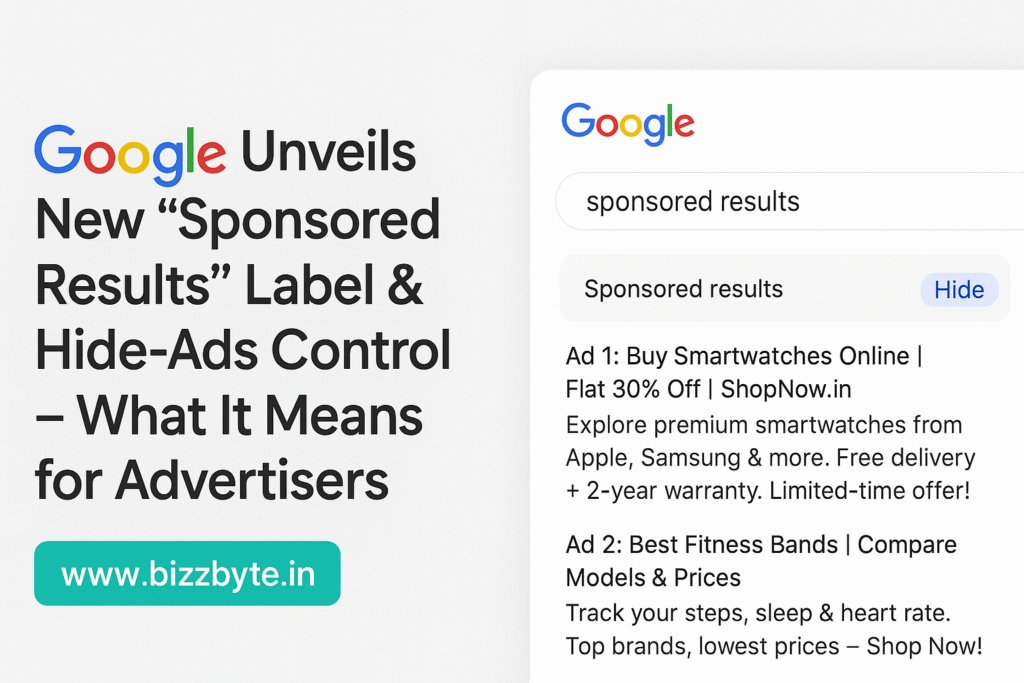
In a major update announced in October 2025, Google has redesigned how search ads are labeled. Instead of tagging each ad individually with the familiar “Ad” or “Sponsored” label, Google now groups all text ads under a sticky “Sponsored results” header.
Additionally, users can now hide sponsored results entirely with a one-click toggle. This move enhances transparency while allowing users more control over what they see. According to Bizzbyte, a digital marketing agency in India, this change could reshape how brands approach visibility and engagement on Google Search.
What’s Changing: New Design & Features
1. Grouped Labeling Instead of Per-Ad Labels
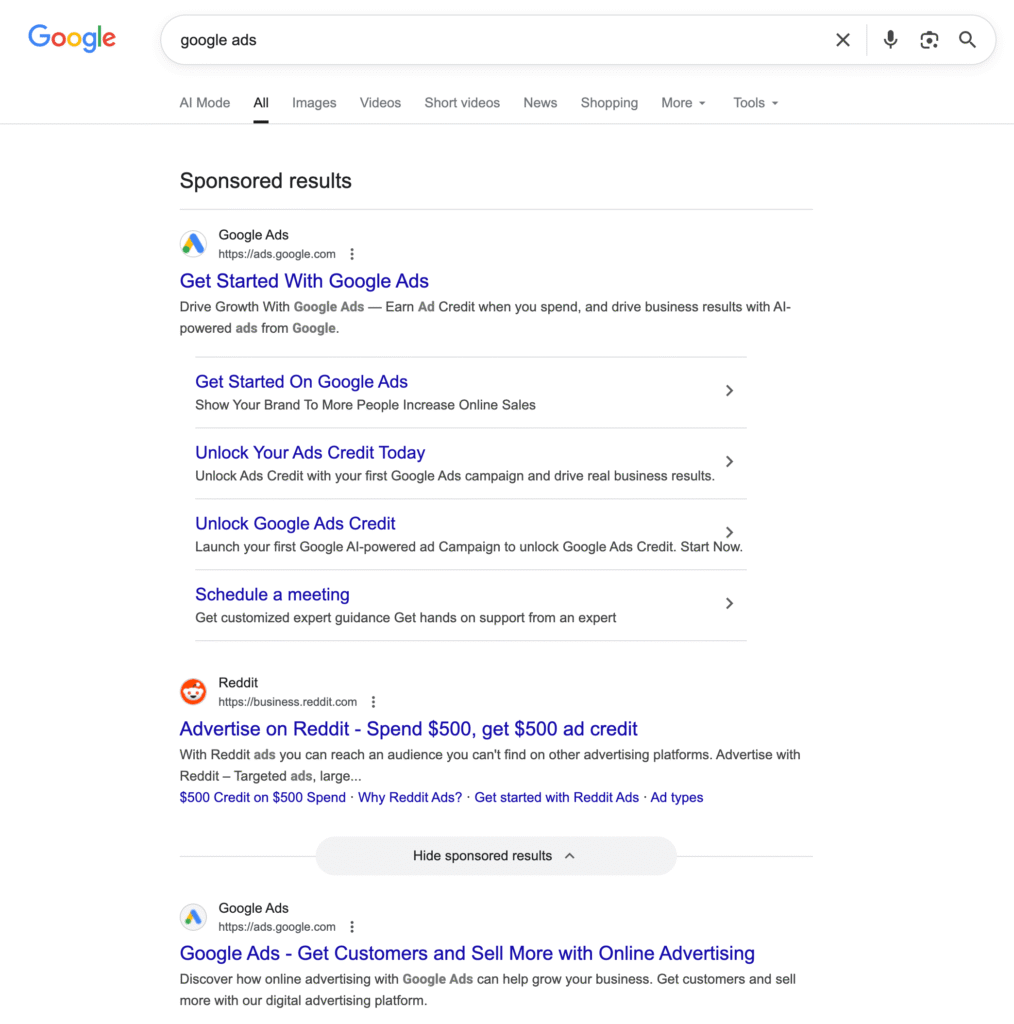
Instead of labeling each ad separately, all text ads are now grouped under one “Sponsored results” section. This header stays visible (sticky) as users scroll — helping users clearly distinguish paid results from organic listings.
2. Collapse Ads with “Hide sponsored results”
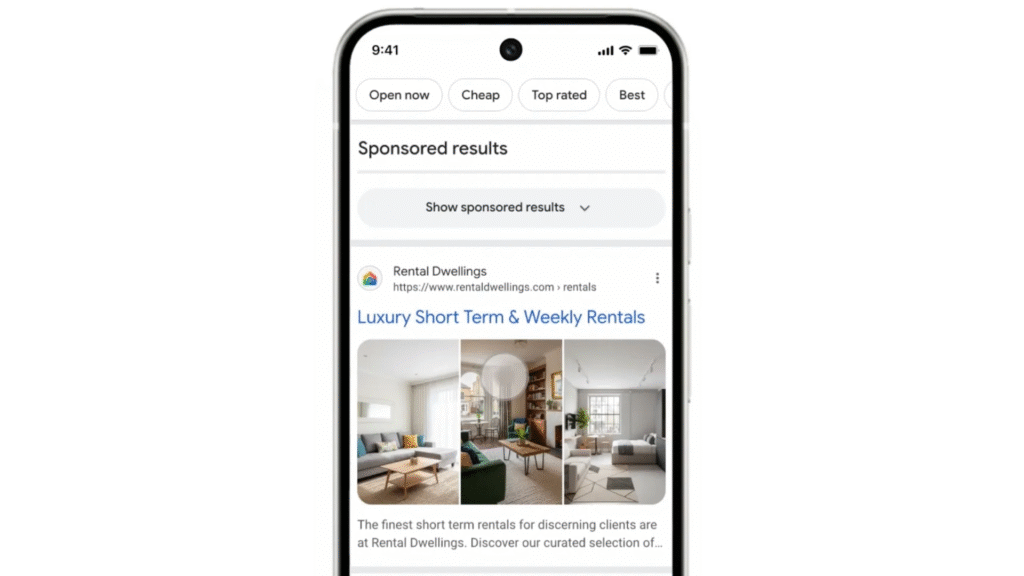
Users can now collapse the ad section with a simple “Hide sponsored results” control. When clicked, the ad block disappears, replaced with a “Show sponsored results” option.
While this improves user control, advertisers may see fluctuations in impression share and CTR as users hide or reveal ads.
3. Applies Across Devices & Formats
This update is being deployed globally, on both desktop and mobile.
The “Sponsored” label logic extends beyond text ads to other ad formats like Shopping ads, which will adopt “Sponsored products.”
In pages with AI Overviews, the sponsored block may appear above or below that AI content, but it still follows the same grouped header format.
4. No Changes to Auction or Ad Limits
Core ad mechanics — like bidding, ranking, and Quality Score — remain the same. Google still limits text ads to a maximum of four per results page.
Why Google Made This Change
- User clarity & trust: Google cites user testing, noting that the grouped label makes it easier to “navigate the top of the page,” and that users more clearly grasp which section is ad content.
- Ad transparency in evolving SERP: As search results increasingly incorporate AI content, images, and interactive elements, clear delineation between ads and other content is more critical than ever.
- Encourage intentional engagement: The design nudges users to consciously interact with the ad block, rather than passively clicking. Some may ignore it entirely if it feels visually distinct.
- Balance placement & perception: Google can maintain aggressive ad monetization while reinforcing that ads are separate, paid content.
Potential Impact & What Advertisers Should Watch
| Metric | Expected Impact | What to Do |
|---|---|---|
| CTR (Click-Through Rate) | Slight drop as users become more aware of ad sections. | Optimize ad headlines and relevance. |
| Visibility | May reduce if users hide ads. | Monitor impression share closely. |
| Ad Quality | More emphasis on clarity and CTA. | Focus on conversion-driven copy. |
| Top Position Value | Increases due to condensed layout. | Re-evaluate bidding for position #1–2. |
| Performance by Device | Mobile may see sharper CTR shifts. | Segment reporting by device. |
📌 Tip: Don’t panic — changes are incremental. Test in your campaigns, compare week-over-week performance, and adapt based on real data.
Example of the New UI – Sponsored Results
Here’s a simplified mockup of how the new ad block may appear (based on Google’s public images):
What Marketers Should Do Now
- Baseline current metrics: Before the redesign fully reaches your users globally, record your CTR, impression share, ad engagement, conversion rates — split by query intent if possible.
- A/B creative refresh: With ad copy becoming more scrutinized, test new variants emphasizing clarity, relevance, and strong call-to-actions.
- Bid adjustments for top positions: Prioritize top ad slots in competitive queries, as visual prominence becomes even more valuable.
- Monitor regular vs. collapsed state: If many users collapse ads, analyze how impact differs in that state — you may see shifts in traffic patterns.
- Segment by device & query type: The effect may vary on mobile vs desktop, or navigational vs transactional queries. Adjust strategy per segment.
- Stay iterative: Roll out changes gradually, monitor performance weekly, and pivot quickly if patterns emerge.
🧠 Expert Comment from Bizzbyte
“Google’s redesign signals a shift toward user-centric advertising. Brands must adapt with smarter ad copy and intent-based targeting rather than relying on visual prominence alone,” says the marketing team at Bizzbyte.
Final Thoughts
Google’s “Sponsored results” redesign may appear subtle, but it fundamentally changes how users perceive ads.
Marketers who act early — testing ad copy, tracking CTR, and emphasizing authenticity — will stay ahead of competitors.
If you need help optimizing your campaigns or building high-performing ad creatives for this new format, visit Bizzbyte — India’s trusted AI-powered digital marketing agency.